






How One Nation Became the Heartbeat of Global Manufacturing
China’s remarkable domination in global manufacturing has earned it the moniker “The World Factory” for more than thirty years. If you go into any store, open your drawers at home, or look at the labels on your equipment, there’s a good likelihood that a lot of things have Chinese origins. Almost every industry is impacted by China’s manufacturing presence, from computers and smartphones to toys, textiles, household appliances, and industrial gear.
However, this change was not an accident. It is the outcome of thoughtful policy-making, economic changes, a large workforce, significant infrastructure investment, and an unparalleled culture of efficiency and speed. China is currently at the nexus of commerce, technology, and manufacturing power, but it also has to contend with new rivals and obstacles.
In this blog, we explore how China became the world’s manufacturing powerhouse, the forces that keep it there, the impact on global supply chains, and what the future might hold.
1. The Historical Rise of China’s Manufacturing Power
To understand China’s status as the world’s factory, we need to look back to the late 1970s.
A.The Economic Reforms of 1978: The Turning Point
China’s economy changed under Deng Xiaoping from being closed and centrally controlled to being more open and focused on the market. Known as the “Reform and Opening Up,” this time was revolutionary:
Foreign businesses were permitted to make investments in China.
- Growth driven by exports became a national focus.
- SEZs, or Special Economic Zones, were established
- Private companies were urged to expand.
This new course laid the groundwork for China’s manufacturing growth by bringing in international capital, technology, and skills.
B.Special Economic Zones’ Ascent
Cities like Shantou, Zhuhai, Xiamen, and Shenzhen developed as centers of innovation:
- Minimal taxes
- Low-cost land
- Appealing working circumstances
- Regulations that are favorable to businesses
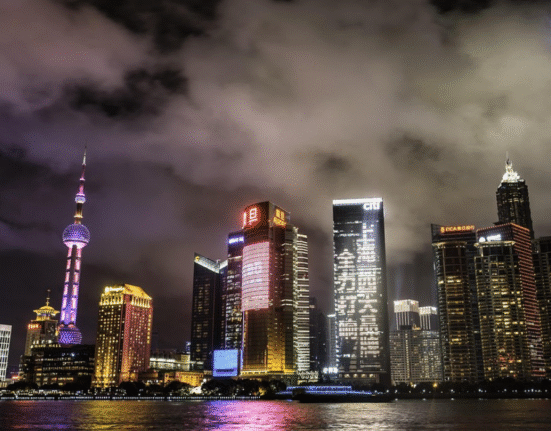
Once a tiny fishing village, Shenzhen has grown into a global center for technology and manufacturing, producing electronics.
2. Why the World Manufactures in China
It wasn’t by accident that China became the world’s factory; rather, it did so by mastering a special set of advantages.
A. A sizable, competent, and flexible workforce
China is home to more than a billion people, making it one of the world’s largest labor pools. Compared to Western nations, labor was incredibly inexpensive throughout the 1980s and 1990s.
However, it became competent in addition to being inexpensive.
Chinese laborers acquired expertise in precision manufacturing, electronics, machinery, and textiles. The workforce’s unparalleled speed and efficiency over time allowed for quick turnaround times for international businesses.
B.World-Class Infrastructure
China invested heavily in infrastructure to support manufacturing:
- Modern ports
- High-speed rail networks
- Highways connecting industrial cities
- Reliable electricity supply
- Massive industrial parks
The ease of transporting goods — both within China and internationally — lowered production costs and sped up global supply chains.
C.The entire ecosystem of the supply chain
Perhaps China’s greatest advantage is this.
Every component required to construct a product can be found locally in places like Shenzhen. Do you need screws? Microchips? What about packaging? Boards of circuits? They are frequently made in the same industrial area.
This ecosystem lessens:
- Costs associated with transportation
- Delays in production
- Reliance on imports
This integrated production environment is difficult to duplicate in other nations.
D. Government Support & Industrial Policy
China’s government played a crucial role through:
- Subsidies to key industries
- Tax breaks for exporters
- Favorable policies for foreign companies
- Heavy investment in education and vocational training
Strategic industries (electronics, EVs, solar panels, steel) received special attention, helping China dominate these sectors globally.
E.Scale Economies
China has massive manufacturing facilities. Compared to competition overseas, factories are able to create goods in far greater quantities.
Production on a large scale entails:
- Reduced prices per unit
- Quicker delivery
- Less expensive goods for customers around the world
For this reason, international companies like Apple, Nike, Samsung, and Tesla rely significantly on Chinese facilities.
3. Global Impact: How China Shapes the World’s Economy
Every aspect of the world economy is impacted by China.
A. Reduced Costs for Global Consumers
The cost of items has been considerably lowered by Chinese manufacturing. China’s large-scale production and cost-effectiveness allow consumers to enjoy cheaper products, from electronics to apparel.
B. Essential Function in Supply Chains
One thing became evident during the COVID-19 pandemic: China is essential to the world.
China’s factory shutdowns impacted:
- Electronics supply (laptops, phones, and chips)
- Automobile components
- Medicines
- Products for consumers
- Continents were affected by the knock-on effects.
4. Challenges to China’s Manufacturing Dominance
While China remains the world factory, several challenges threaten its long-term lead.
A. Rising Labor Costs
As China’s economy grows, so do wages. Manufacturing is no longer as cheap as it was 20 years ago. Many companies are moving low-cost production to:
- Vietnam
- India
- Bangladesh
- Mexico
However, these countries still lack China’s vast supply chain ecosystem.
B. Environmental Concerns
China’s rapid industrialization came with environmental costs:
- Air pollution
- Water contamination
- High carbon emissions
The government is now enforcing stricter regulations, increasing manufacturing costs.
C. Geopolitical Tensions
Trade wars, sanctions, and attempts by Western countries to reduce dependence (“decoupling”) pose challenges.
Technological competition — especially in semiconductors, AI, and EVs — adds to the complexity.
5. How China Is Reinventing Itself
China is improving rather than losing its manufacturing advantage in spite of obstacles.
A. Transitioning from Low-Cost to High-Tech Production
China is now concentrating on manufacturing high-value products such as:
- Electric automobiles
- Automation
- High-tech electronics
- Semiconductors
- Technology for renewable energy
Businesses that are emerging as global leaders include BYD, Huawei, DJI, and CATL.
B. Smart Factories & Automation
In terms of factory automation, China is emerging as a leader:
- Assembly line robots
- AI-driven quality assurance
- Intelligent logistics systems
These developments improve accuracy and lessen reliance on inexpensive labor.
C. The Belt and Road Initiative (BRI)
China is establishing international trade networks throughout Asia, Africa, and Europe in order to maintain its manufacturing might. China is able to export commodities more effectively thanks to new ports, railroads, and trade routes.
D.Emphasis on Domestic Innovation
China wants to achieve key technologies, reducing reliance on foreign suppliers and improving its competitiveness in high-tech industries.
Will China Continue to Be the World’s Factory?
Although several nations are emerging as rivals, China’s advantages are still distinct:
- Unrivaled clusters of supply chains
- Extensive experience in manufacturing
- Infrastructure that required decades to construct
- Strong backing from the government
- Technological advancement
China is on course to continue being the world’s hub for sophisticated, large-scale manufacturing, even though some low-cost production may move to other nations.
It is more than just the “world factory”; it is emerging as the global leader in both manufacturing and innovation.
Today, China stands at a crossroads — still a dominant force, but increasingly focused on high-tech manufacturing, innovation, and automation. While challenges exist, China’s resilience and adaptability suggest it will continue to shape the future of global production for years to come.
As the world navigates geopolitical tensions, supply chain disruptions, and the digital revolution, one thing remains clear:
China’s role in the global economy is far from over — it is evolving.